Total Shoulder Replacement (Anatomic Shoulder Arthroplasty)
Medically reviewed by John C. Redfern, MD, Board-Certified Orthopaedic Surgeon.
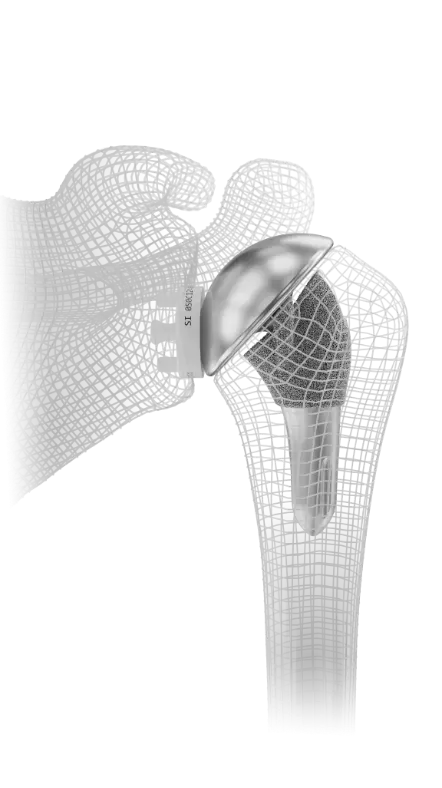
Total shoulder replacement, also called anatomic shoulder arthroplasty, replaces the worn ball of the upper arm bone with a smooth metal head and resurfaces the socket, recreating the shoulder’s natural anatomy. For patients with shoulder arthritis and a healthy rotator cuff, it is one of the most reliable ways to relieve pain and get comfortable motion back.
What Total Shoulder Replacement Can Do for You
Shoulder replacement has advanced dramatically over the past fifteen years, and today it is a refined, well-studied operation. Patients choose it for a short list of very practical reasons:
- Relief from the deep, constant ache of arthritis, including the pain that interrupts sleep.
- Smoother, more comfortable motion for everyday tasks like dressing, grooming, reaching a shelf, or lifting a grandchild.
- A return to an active lifestyle: walking, golf, swimming, cycling, gardening, and travel.
- Modern implants that restore the shoulder’s natural anatomy more precisely than earlier designs.
- Bone-preserving techniques that protect your options for the future.
Understanding Your Shoulder
Your shoulder is a ball-and-socket joint made up of three bones: the humerus (upper arm bone), the scapula (shoulder blade), and the clavicle (collarbone). The rounded top of the humerus, the humeral head, is the ball. A shallow cup on the shoulder blade called the glenoid is the socket. Both surfaces are covered in articular cartilage, a smooth, slippery layer that lets the ball glide freely in the socket. The rotator cuff, a group of four tendons, and the large deltoid muscle over the top of the shoulder hold the joint centered and power its movement. Together they make the shoulder the most mobile joint in the body.
Conditions Total Shoulder Replacement Treats
Shoulder arthritis develops when the cartilage lining the joint wears thin over the years. Without that cushion, bone rubs on bone, the joint stiffens, and pain builds. Anatomic total shoulder replacement is designed for arthritis in a shoulder whose rotator cuff is still intact and working. The most common causes Dr. Redfern treats are:
- Osteoarthritis, the “wear and tear” arthritis that comes with age and years of use, and by far the most common reason for shoulder replacement.
- Rheumatoid and other inflammatory arthritis, in which the immune system inflames the joint lining and gradually wears away cartilage.
- Post-traumatic arthritis, which can develop years after a fracture, dislocation, or major rotator cuff injury.
- Avascular necrosis, a loss of blood supply to the humeral head that causes the bone beneath the cartilage to collapse.
Nonsurgical Care Comes First
Surgery is never the first step. Most patients begin with activity modification, physical therapy to keep the shoulder moving, anti-inflammatory medication, and in some cases a corticosteroid injection to calm a painful flare. For many people these measures provide meaningful relief for a long time. Dr. Redfern recommends replacement when arthritis pain and stiffness continue despite good conservative care and begin to take away the things that matter: restful sleep, dressing and grooming without help, work, and recreation. At that point, replacement becomes the option most likely to give you your shoulder back.
Your Shoulder Replacement Options
Shoulder replacement is not one operation but a family of procedures, and matching the right one to your shoulder is the heart of the evaluation.
- Anatomic total shoulder replacement replaces the humeral head and resurfaces the glenoid, keeping the ball and socket in their natural positions. It relies on your rotator cuff to center and power the joint, which is why it is reserved for shoulders with a healthy cuff.
- Stemless anatomic replacement is a bone-preserving version of the same operation. The new humeral head is anchored in the top of the arm bone without a long stem down the canal, keeping more of your natural bone in place.
- Hemiarthroplasty replaces only the humeral head and is used in select situations where the socket is healthy.
- Reverse shoulder replacement switches the positions of the ball and socket so the deltoid can lift the arm. It is the right choice when the rotator cuff is torn beyond repair. Learn about reverse shoulder replacement or read our side-by-side comparison.
The InSet® Total Shoulder System
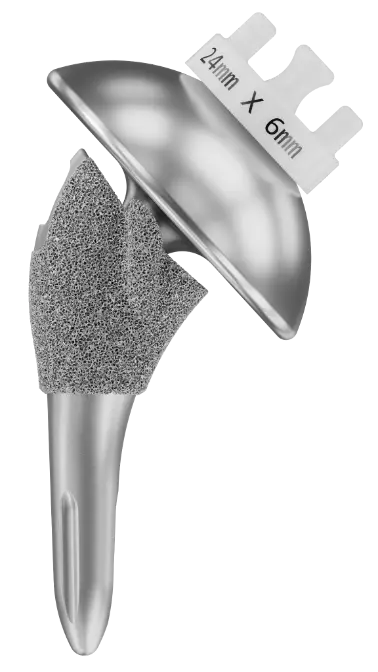
Dr. Redfern performs anatomic replacement with the InSet® Total Shoulder System from Shoulder Innovations, a titanium alloy implant system designed to restore the shoulder’s natural anatomy and balance. It is available in a short-stem configuration and a bone-preserving stemless configuration, so the implant can be matched to your bone and your anatomy.
A Smarter Socket: the InSet® Glenoid
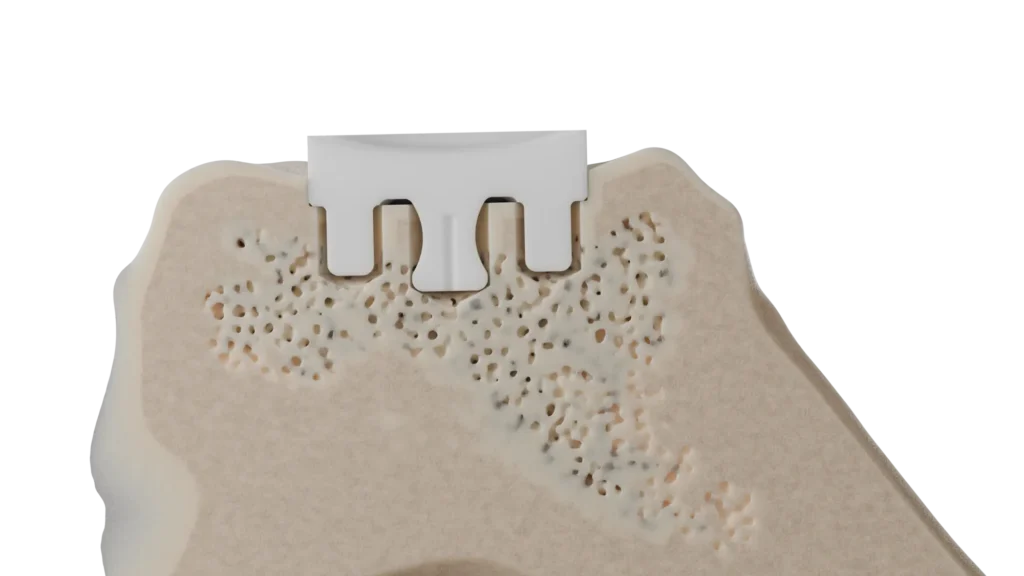
The socket side of a total shoulder replacement has historically been its most demanding component. Traditional glenoid implants sit on top of the bone surface, where years of load can gradually work them loose, and loosening of the socket has been the most common reason a shoulder replacement eventually needs revision. The InSet® glenoid takes a fundamentally different approach: it is seated within a precisely prepared pocket in the strongest, most supportive bone of the glenoid rather than on top of it. Laboratory testing shows this InSet® design substantially reduces the rocking stresses that lead to loosening, and long-term clinical studies of the InSet® glenoid have reported improved range of motion with no loosening. That combination of stability and durability is the central reason Dr. Redfern selected this system for his patients.
Built to Bond with Your Bone
On the arm side, the InSet® humeral components feature curved fins with a roughened, porous titanium surface that encourages your own bone to grow into the implant, a process called bony ingrowth. As the bone knits into the surface, the implant becomes progressively more stable and secure. Because the design preserves bone, the humeral component can often remain in place and be converted to a reverse configuration if your shoulder ever needs further surgery years from now, sparing you a larger operation.
Planning Your Surgery in 3D
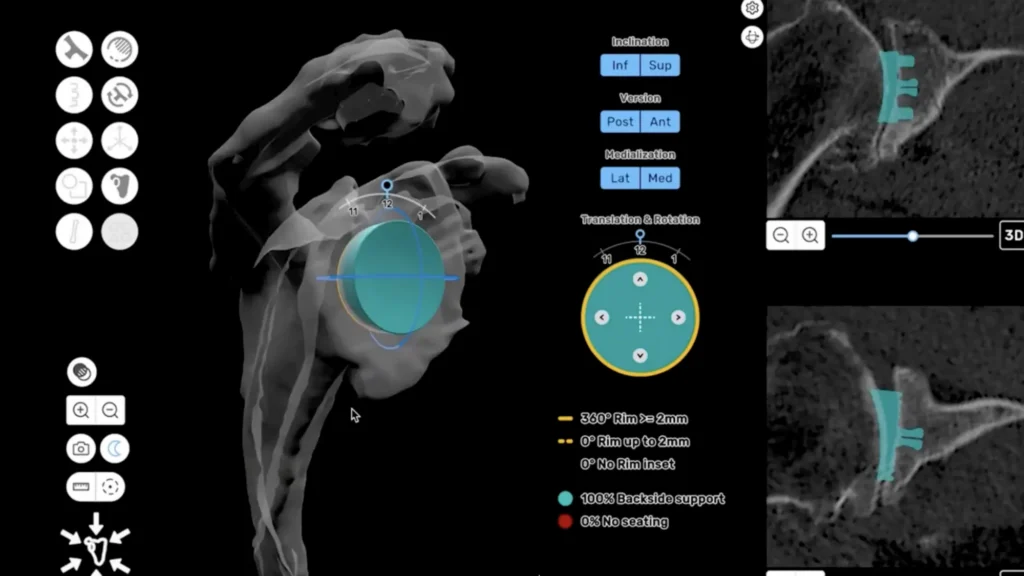
Precise implant position is one of the biggest drivers of a well-functioning, long-lasting shoulder replacement. When appropriate, Dr. Redfern uses CT-based three-dimensional planning software to build a computer model of your shoulder before surgery. On that model he can select the implant type and size and map out its exact position and angle in advance, so decisions are made calmly at the planning stage rather than improvised in the operating room. Planning this way supports a shorter, more predictable procedure and a more accurately restored joint.
Preparing for Surgery
Once you and Dr. Redfern decide on replacement, our team walks you through every step. You will complete imaging (X-rays and often a CT scan for planning), a medical evaluation to make sure you are ready for anesthesia, and a review of your medications. You may be given simple rotator cuff and posture exercises to start ahead of time; a shoulder that goes into surgery moving well tends to recover well. If you smoke, stopping before surgery meaningfully improves healing. You will receive instructions on fasting the night before, a special antiseptic wash for the shoulder, and what to bring. Loose, front-opening clothing makes the first days easier.
Surgery Day
Plan to arrive one to two hours before your scheduled time. Total shoulder replacement is performed under general anesthesia, usually combined with a regional nerve block that keeps the shoulder comfortable for many hours afterward. The operation itself typically takes one to two hours. As soon as he finishes, Dr. Redfern meets with your family or friends to let them know how everything went. You wake in the recovery area with your arm in a sling, and before you leave, a therapist reviews your first exercises and how to manage the sling, dressing, and daily tasks at home. Many patients go home the same day; others stay one night.
Your Recovery Timeline
Every recovery is individual, and Dr. Redfern’s team will tailor yours, but most patients follow a similar arc:
- First two weeks: The sling protects the shoulder while soft tissue heals. Discomfort is managed with a combination of the nerve block, medication, and icing. Gentle pendulum and elbow, wrist, and hand exercises begin right away. Many patients notice that the deep arthritis ache is already gone.
- Weeks two to six: Light daily activities such as eating, writing, typing, and dressing return progressively. Physical therapy focuses on gradually restoring motion while the repaired tissue continues to heal.
- Weeks six to twelve: The sling comes off and strengthening begins. Driving, cooking, and most household activities resume. Golf, swimming, and other low-impact recreation typically return during or shortly after this window.
- Three months to one year: Strength and endurance keep improving. Most patients are enjoying the activities they had given up well before the one-year mark.
Completing your physical therapy program is the single most important thing you can do to get the most from your new shoulder.
Hear From a Total Shoulder Replacement Patient
Meet Roger, who returned to the active life he loves after an InSet® total shoulder replacement.
Video courtesy of Shoulder Innovations.
What the Research Shows
Anatomic total shoulder replacement has a long, well-documented track record. Published studies report that roughly nine in ten patients achieve good or excellent pain relief, and that implant survivorship exceeds ninety percent at ten years. Durable socket fixation matters most for younger, more active patients, which is exactly the problem the InSet® glenoid was engineered to address. Dr. Redfern will talk with you about what these results mean for your age, activity level, and goals.
Understanding the Risks
Total shoulder replacement is a safe and highly effective operation, and serious complications are uncommon. As with any surgery, risks include reactions to anesthesia, infection, bleeding, nerve or blood vessel injury, stiffness, fracture, implant loosening or wear over time, and the possibility of revision surgery in the future. Dr. Redfern reviews your individual risk profile with you in detail, and our surgical protocols, from preoperative optimization to antibiotic and blood clot prevention, are designed to keep these risks as low as possible.
Why Patients Choose Dr. Redfern
Dr. Redfern is a fellowship-trained, board-certified orthopaedic surgeon whose practice is focused on the shoulder, from arthroscopic repair through anatomic, reverse, and revision replacement. He was named a Colorado Springs Top Doctor for 2025, and he spent several years as an engineer before medicine, a background that shows in how carefully he plans each replacement and how clearly he explains it. If you are weighing shoulder replacement, a consultation will give you a clear picture of your shoulder, your options, and what you can realistically expect. Meet Dr. Redfern.
Frequently Asked Questions
How long does a total shoulder replacement last?
Modern anatomic shoulder replacements have an excellent track record, with published studies reporting implant survivorship above ninety percent at ten years and many patients enjoying their shoulders far longer. Durable socket fixation is the key to longevity, which is why Dr. Redfern uses the InSet® glenoid design.
How painful is recovery from total shoulder replacement?
Surgical soreness is most noticeable in the first one to two weeks and is well controlled with a regional nerve block, medication, and icing. Many patients are pleasantly surprised to find the deep arthritis ache is gone almost immediately, with surgical discomfort fading over the following weeks.
Can I have total shoulder replacement as an outpatient?
Yes, many patients are candidates for same-day total shoulder replacement, depending on overall health and support at home. Dr. Redfern will recommend the setting that is safest and most comfortable for you.
When can I drive, work, and play golf again?
Most patients drive and return to desk work within a few weeks once out of the sling and off pain medication. Golf, swimming, and similar low-impact activities generally return around three months, with strength continuing to build through the first year.
What's the difference between total and reverse shoulder replacement?
Total shoulder replacement recreates the joint’s natural anatomy and depends on a working rotator cuff. Reverse replacement switches the ball and socket so the deltoid powers the arm, which is the better choice when the cuff is torn beyond repair. See our full comparison.
Does insurance cover total shoulder replacement?
Shoulder replacement for arthritis is generally covered by insurance, including Medicare, when it is medically necessary. Our office verifies your benefits and walks you through any questions before scheduling surgery.
Schedule a Consultation with Dr. Redfern
Call the office or request an appointment online and our team will help you take the next step.